The Tactical Squad

Category: Reviews

Revisiting The Threat Beyond
Revisiting The Threat Beyond

Its been a while now since the Warlord cycle ended and, while it has taken me a bit longer than intended, there is still a lot to be gained from going back to take another look at those War Packs. I think that, for the Tactical Squad, The Threat Beyond may have been one of the most anticipated War Packs at the time it was originally released. Astra Militarum had mostly been floundering since the Core Set and the pack seemed to include great cards for many factions. With the Warlord cycle in full swing, I think the impact was taken very much in stride. Looking back now this may have been the biggest release of the cycle. But enough build up; let’s talk cards.

Astra Militarum

I don’t think anyone anticipated this War Pack more than fans of the Astra Militarum. Colonel Straken was largely a let down and Torquemada Coteaz was an opportunity to start fresh.
089-torquemada-coteaz

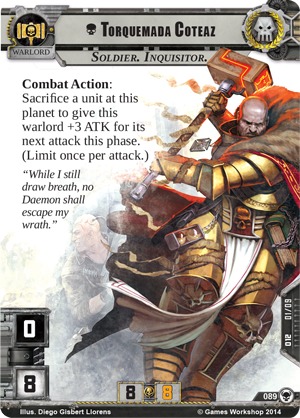
Coteaz himself is a very unique and powerful warlord.  The combination of his stats and ability proved to be one of the most efficient setups of any warlords we’ve seen so far. Starting with eight cards and eight resources opens up the possibility of much more powerful and efficient first turn plays. One card and one resource may not seem like much but it really does make a world of difference and makes him the go to for AM combo heavy decks. Even with all the upsides Coteaz suffers from a base ATK of 0 and the need sacrifice unit to be able to contribute to a fight. Attacking for 3 is very powerful and provides tremendous assassination potential. Requiring a unit to sacrifice to have an ATK of 3 means that this warlord will be left high and dry if he doesn’t have support and that his staying power is minimal. Support comes in many forms for the inquisitor. His signature army, Coteaz’s Henchmen, is the exactly the support needed. Though the unit lacks hitting power they have a great combo power. If, in a turn, Coteaz and a henchman or two are the target of a Preemptive Barrage you will be able to make four to five ranged attacks from the units affected. Because of this, a single henchman at a planet can make an opponent very cautious.
092-the-glovodan-eagle

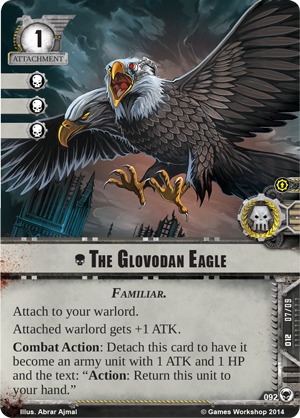
As you can imagine a Coteaz deck will require that a lot of units be sacrificed over the course of a game. The Emperor Protects means that units that are sacrificed can still factor in to the longer term. Beyond this use the card is only a single shield, making it harder to make use of often. Next up, the signature squad includes one of the most interesting signature attachments in the game. The Glovodan Eagle is a suprisingly versatile piece of gear. For the first couple of weeks after release one local Toronto player managed to repeatedly surprise just about everyone with some of the combos she achieved. Finally, we round things out with the signature support, Formosan Black Ship. A great utility for an even greater value, this support giving the signature squad the staying power needed to swing the tide of a battle. All told, Torquemada Coteaz and his signature squad are one of the most powerful in the game. Unfortunately the inquisitor is also one of the most difficult warlords in the game to use.

Space Marines
094-firedrake-terminators

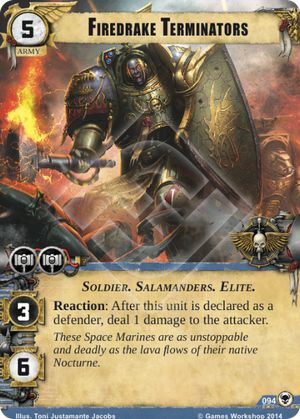
The Threat Beyond isn’t a particularly important War Pack for Space Marines but it did bring three very interesting new options to the table. Possibly the best option provided is the Firedrake Terminators. This Elite unit may be one of the best in the game, having good command and ATK, decent HP, and an excellent ability. As Elite units are given more support the Firedrakes’ stock will only grow, especially if swarm continues to be prominent in the meta. Marines also get two other decent cards, the Imperial Fists Siege Force and the Nocturne-Ultima Storm Bolter. Both of these cards have interesting abilities but may have limited use at this point. The storm bolter is too expensive for what it offers, though a 2-shield card that can be tutored via Earth Caste Technician is still useful. The siege force on the other hand is a good value but has limited scope. As the game sees more Ally cards released the siege force will improve in value and the Planetfall cycle seems like it will provide the opportunity. (Editor’s Note: There have already been 3 new Ally units introduced in the first 2 packs of Planetfall)

Orks
097-snakebite-thug

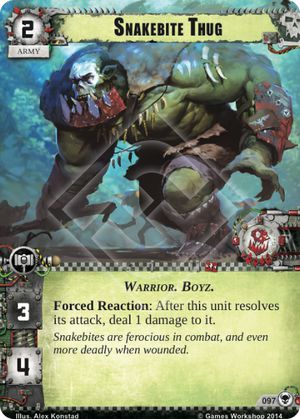
This War Pack was a big release for Orks, and by extension AM and Chaos, because of the two very powerful common units provided. The first of the units, the Snakebite Thug is another in the series of efficiently costed units with a drawback. Fortunately for the git the draw back is a minor one at worst and in some cases can even be a boon. Combo the fact that this unit is a Warrior and that it can be used with Staging Ground the utility is too much to ignore. The second unit, the Evil Sunz Warbiker, is the Ork faction “Warlord Groupie”. As one of the 2 cost groupies it is a great value, especially due to the combo potential with Staging Grounds. Finally Orks also get the unique support Mork’s Great Heap. Because this support is so expensive and you can only have one in play at a time it can be a difficult include. Though it does seem that many Ork players do find a single copy to be a worthwhile include for its occasional appearance.

Chaos
100-noise-marine-zealots

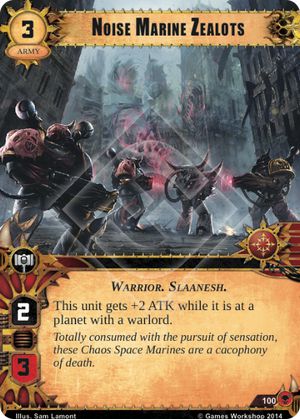
Chaos get the veggies of this War Pack. The cards included aren’t flashy or exciting but generally they are good to have available. The Noise Marine Zealots perhaps exemplify this the most. The Zealots help fill in the 3 cost slot in the faction’s curve, something Chaos needed more than many people realized. And in Zarathur they are a prime target for Infernal Gateway, raising a threat that players need to be constantly conscious of. The other cards given to Chaos have a lot of potential for growth. Turbulent Rift has a great ability but suffers from the need to use Elites. As support for the trait expands though the value of this card will increase. Cacophonic Choir on the other hand has good utility in the swarm heavy meta but doesn’t quite seem to fit in any of the warlords released to date.

Dark Eldar

For once in the Warlord cycle Dark Eldar get almost nothing in the War Pack. Kabalite Halfborn, Slake the Thirst, and Shadow Field are all decent cards with some possible uses but to date have limited reason to go in a deck.

Eldar
107-seers-exodus

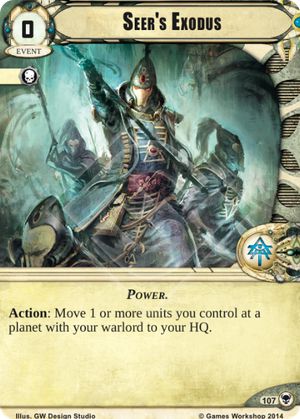
For Eldar utility is the name of the game in The Threat Beyond. Mighty Wraithknight is a very powerful combat unit with an interesting ability. The exhaustion does hit your own units but if played correctly it can be easy to work around. Maybe you opponent has a lot of Ranged or the majority of your combat forces are in HQ, this effect will help balance that battle. Next Seer’s Exodus, an unassuming card, brings a new powerful trick to the table. I think a couple copies of this card is a great choice to include in any decks using Eldar cards. Seer’s Exodus provids a way to get out of bad situations you wouldn’t otherwise be able to. An excellent counter to Aun’shi and other assassination warlords, it leats you play riskier than you normally would be able to. Finally the children of Isha get Slumbering Gardens. Right now this card has next to no use. Maybe in the future we will see a reason to play it.

Tau
110-ksimyen-orbital-city

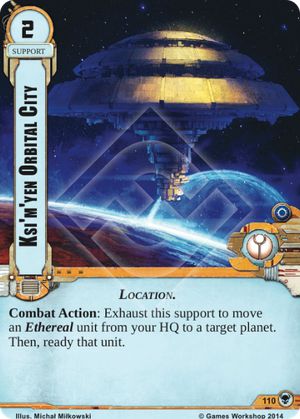
Closing out the War Pack as always are the Tau. First they get the Fire Warrior Grenadiers. This unit is ok for its cost but it lack of printed command hurts. If the Ethereal units available continue to expand, especially 2 or 3 cost options, this unit may become more popular, but until that time they will likely rarely see use. Finally the very last card in the War Pack is maybe the most talked about. Ksi’m’yen Orbital City is a super powerful card that really completes the Aun’shi deck. The Orbital City takes all the downsides of the Ethereal trait units and turns it into a great advantage.

Conclusion

As the first cycle of Conquest wrapped up this War Pack helped bring the game’s initial development to a close. I think it was The Threat Beyond that really helped cement many developing themes. This War Pack will be a staple for quite a while.
War Journal - There is Only Worr

War Journal - There is Only Worr

Rotation 5 - December 3rd to December 22nd

Its been another slow month in my gaming life this December. I only managed to get in 10 games of Warhammer 40,000: Conquest but included in that was the first tournament I’ve been to in a while. With the release of Decree of Ruin I made the decision to focus my limited gaming time on our new Astra Militarum warlord Broderick Worr. While Captain Cato Sicarius and ”Old One Eye” were also sleeved up to play this rotation, I didn’t manage to get enough games with either to warrant reviewing them. So on that note lets talk about our grizzled Militarum vet.
Worr

[table width=“250px”] Army (28)[attr colspan=“2”] 4x Anxious Infantry Platoon 3x Cadian Mortar Squad 2x Captain Markis 2x Enginseer Augur 3x Iron Guard Recruits 3x Ratling Deadeye 2x Rogue Trader 3x Sanctioned Psyker 1x Seraphim Superior Allegra 3x Tallarn Raiders 2x Void Pirate [/table]

[table width=“250px”] Support (3)[attr colspan=“2”] 2x Catachan Outpost 1x Forward Barracks [/table] [table width=“250px”] Attachment (3)[attr colspan=“2”] 1x Commissarial Bolt Pistol 2x Promotion [/table] [table width=“250px”] Event (16)[attr colspan=“2”] 3x Muster the Guard 2x Noble Deed 3x Preemptive Barrage 2x Summary Execution 3x Suppressive Fire 3x To Arms! [/table]

For the first time since I started writing these journals we’ve seen the release of brand new cards. I decided to start with Worr because my last two rotations each included one of the previous Astra Militarum warlords, Colonel Straken and Torquemada Coteaz. I thought Worr would be the next logical step and provide a good frame of reference for testing. Starting out I felt able to go in pretty much any direction with putting together a deck. There is not much established wisdom or particular innovations for Worr, leaving the field open to lots of ideas. Starting with his ability, which focuses on Astra Militarum units at stronghold (green) planets, I was determined to keep the army units mono faction with the exception of Rogue Trader and Void Pirate. I decided that this would be the perfect deck to run Muster the Guard out of. Worr’s ability works well regardless of what planet he is committed to, making it easier to keep him out of danger while he is exhausted. Additionally his other ability to destroy army units that retreat from the planet he is at means that though he won’t win command while exhausted he is still very effective at destroying opposing command units. Beyond the general decisions I started to look at the opportunities his signature squad and potential synergies. I decided to add Noble Deed for the extra utility from combat units that would otherwise be destroyed because they can’t retreat. I included Enginseer Augur to help dig for the signature support Forward Barracks and potentially deploy outposts for free. With the generally solid command in the rest of the deck and numerous buffs to the ability of the Enginseer (extra attack at green planets, more sacrifice or destroy effect than I would normally have, etc) I found it worked well in this deck where maybe it wasn’t a strong include in others. I added Captain Markis for similar reasons to Noble Deed and Cadian Mortar Squad for the synergies with the sacrifice effects along with their added value under Worr’s command. When I started to play games with the Commissar I found that many of my initial assumptions seemed to be correct. Even with only three stronghold (green) planets showing up in a game - the minimum number - he is still very capable. I was able to build tremendous collections of units for very effective combats and play a strong command game. The use of Muster the Guard and Broderick’s utility for the remainder of that turn generally followed the pattern I predicted. Despite all this I actually found it difficult to win games. Most games had a reasonably tight finish, or had a one sided result after several particularly close combats, but I only managed to win a quarter of my games. At this point I think this can be attributed more to myself as a player than the deck or Worr himself. I have had a much lower win percentage lately and made a reasonable number of costly play errors, particularly in the tournament. Moving forward I’m not sure where I would go with Broderick Worr. As the Planetfall cycle continues and we see more cards become available, a more defined play style may become evident, but until that point I think I will likely fiddle with something very similar to what I’ve already built. Next rotation I’ll be focussing on our other new combatant, Commander Starblaze. But, I also plan to build Zarathur, High Sorcerer and try to get in some more games with Old One Eye. Until next time!

[table width=“208px”] Worr[attr colspan=“2”] Loss v Coteaz (Planet 5) Win v Eldorath (Planet 7) Loss v Ragnar (Planet 7) Loss v Baharroth (Planet 5) Loss v Old One Eye(Planet 7) Loss v Straken (Planet 3) Loss v Cato (Planet 4) Win v Nazdreg (Assassination 6) [/table]

[table width=“208px”] Cato  [attr colspan=“2”] Loss v Worr (Planet 5) Loss v Eldorath (Planet 6) [/table]

Revisiting Zogwort's Curse

Revisiting Zogwort's Curse

Well, Worlds Weekend at the FFG Event Centre in Minnesota recently came and went and now that thing have began to calm down it seems I have time to get some more writing done. That means it’s time to continue revisiting the cards we were released during the Warlord cycle, this time looking at the cards contained in the fourth War Pack, Zogwort’s Curse. This pack saw strong tools for many of the factions, though overall it may have been underestimated.

Orks

067-old-zogwort

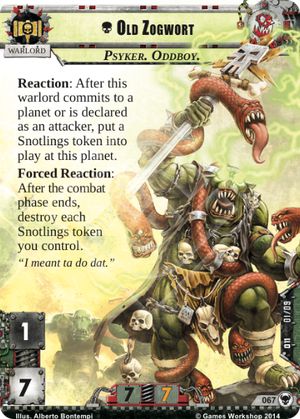
We open the pack with a new warlord, Old Zogwort.  At a cursory glance his ability to create Snotling tokens, and the Forced Reaction that destroys them all at the end of combat seem at odds, but with some intelligent play you can leverage his advantage in a drawn out fight.  This mean that Zogwort needs to stick around for multiple rounds of combat and because of this he can be very vulnerable to being bloodied and assassinated.

Next we have a contender for most underwhelming signature army, Zogwort’s Runtherders. This unit is very hard on the cost curve for any Zogwort deck and unfortunately doesn’t provide much. Its ability is an Interrupt meaning it will trigger even in response to a killing blow, but this unit still leaves something to be desired.

Zogwort’s signature support, Zogwort’s Hovel, is one of his best signature cards. This card serves to prevent opponents from focusing on attacking Zogwort with a number of smaller units for fear of not being able to deal with the many snotlings that may result. Since the game has moved in the direction of a swarm focused meta the stock of this card has only increased that much more as now Zogwort is less likely to face single high damage attacks. Unfortunately, as is the case with all signature supports, you can only have one copy of this card in your deck.

071-launch-da-snots

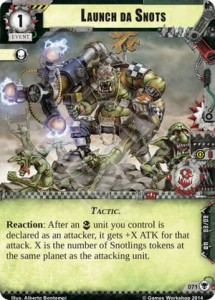
Wyrdboy Stikk unfortunately stands up about as well as Zogwort’s Runtherders. Having the three shield card is nice and the ability is flexible, but I’m not sure I want to find myself choosing the ability over the shield icons.  Moving on to the final card in Zogwort’s signature squad, Launch Da Snots, which, given its power, may be the best card in his signature squad. This event is a Reaction to a unit being declared as an attacker, meaning you can use it as a surprise when needed and not risk the unit in question being routed or destroyed by enemy card effects before having the opportunity to make its attack. It is also noteworthy that this event actually synergizes well with Zogwort’s Reaction since you can decide what order they happen in, allowing you to create a snotling with his ability and then add the extra attack with Launch Da Snots.

All told, I think Zogwort has a lot more potential than many first believed, but he definitely is still missing a few pieces. We didn’t see any direct support for Snotling tokens, but his deck still has a lot of potential to be competitive. If you are interested in hearing more of my thoughts on Old Zogwort then you can read about my experience playing with him in my War Journal - That’s a Lot of Tokens.

Space Marines

Space Marines continue to receive Space Wolves love with their first army unit in this War Pack, the Blood Claw Pack. This unit provides a potential economic advantage if played correctly in a Space Wolves heavy deck, but at this point in the game there are only a handful of army units that it can target and this card is probably not worth the economic advantage you will occasionally gain from the limited expensive targets.

073-rally-the-charge

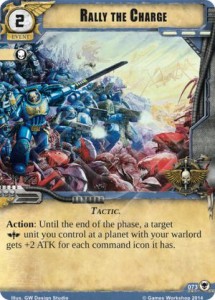
Next is the event Rally the Charge, a very powerful card but one that relies too heavily on card combos or units that don’t often see play. I don’t know if this card is powerful enough to bring those less played units back into vogue, and I think I would suggest keeping it in the back of you brain as a potential power card for later in the LCG’s life.

Finally SM are given the support Secluded Apothecarion. Like most alternate economy cards, this support hasn’t seem much play at all. Looking at this card again, I think there is potential for a decent long term payoff in some decks but I’m not sure if what it brings is enough to really shift the established Space Marine play styles. Certainly as more and more low cost Space Marine units become available the stock of this support will increase, but until that his critical mas this will continue to sit in most people’s binders.

Astra Militarum

With each War Pack in the Warlord cycle, Astra Militarum seems to get more and more toys. This pack is no different and in fact adds also is a great help to the factions that can take AM allies.

076-tallarn-raiders

First we see Steel Legion Chimera, another tool added to the Militarum’s strong defense game. This army can be a tremendous benefit in certain game states, stacking with cards like Blood Angels Veterans, Bodyguard, and Rockcrete Bunker. The cost of the Chimera can be hard to pay sometimes, but if your cost curve predominantly sits around 2 cost and below then there is room in a deck for this card.

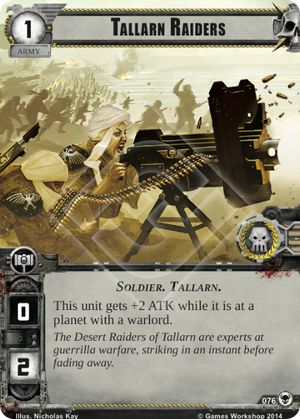
Tallarn Raiders come next in the War Pack. I think this army unit qualifies as the best warlord groupie that we see during the Warlord cycle. I say this often but it bears repeating, 1 cost for 1 command icon is a great value. In addition the Raiders have an effective combat presence. This makes them a staple include in any deck using AM faction cards.

Finally Astra Militarum get the support, Staging Ground. Another in a large collection of supports available to AM, this card gives a very surprising amount of flexibility. Combined with Ammo Depot or just a lot of cheap units on hand this card can provide a serious tipping point to most combats. A staging ground essentially allows you to ambush in a target unit. I’ve found this to be a very strong include for many decks.

Chaos

078-gleeful-plague-beast

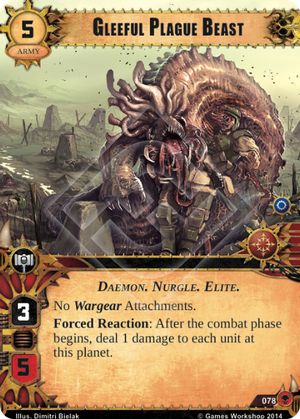
Chaos receive one of their most important cards all cycle in this pack. At first I was very unimpressed with Gleeful Plague Beast. I didn’t see why you would take it over Vicious Bloodletter, but I began to see articles online singing its praises and the local Zarathur enthusiast started to get very excited by this new Elite Daemon. At this point its hard to envision a Chaos deck without the Plague Beast. While the army unit damages your own units in addition to your opponents, it does so at a point in the round that is very hard to prevent. This means that, short of Inquisitorial Fortress or judicious use of damage effects, your Plague Beast will have a large impact on the combat phase. Pair it with Zarathur, High Sorcerer and you will be doing 2 damage to all enemy units. With Ku’gath Plaguefather you are priming your warlord so that he is ready to use his ability. I definitely think the Gleeful Plague Beast is a strong include in most Chaos factions decks.

The other two cards that Chaos gets this pack are both fairly low impact. The first, Blight Grenades, is very slow and very easily countered. It is a high cost to use and has very few viable targets to attach to. The second, Doombolt, is an interesting but very limited card. It is another source of direct damage but can only be used during deployment. As a result it requires setup and planning to use effectively. Both of these cards could get better given some time and the release of new combo cards.  But unless and until that happens I don’t expect to see them much at all.

Dark Eldar

Next up the forsaken children of Isha receive even more great options to add to their arsenal. The first card is their warlord groupie, the Bloodied Reavers. Initially I though that the Reavers ranked as one of the less effective groupies, landing maybe in the middle of the pack, but they have actually proved to be one of the most used of the bunch. The limit of no wargear attachments is almost completely irrelevant in the factions that can play the Bloodied Reavers, and it fills in the two cost army slot in deck construction allowing for a smoother curve.

083-searing-brand

Dark Eldar also get a couple Torture traited cards in preparation for Urien Rakarth. Crucible of Malediction brings an added utility to the Torture cards in your deck. Unfortunately this card can be very very slow. Having a maximum of 7 opportunities to trigger over the course of a game. Even then only if you play it on turn one and the game plays out 7 rounds. It also requires you to have torture events you’re able to play in hand.

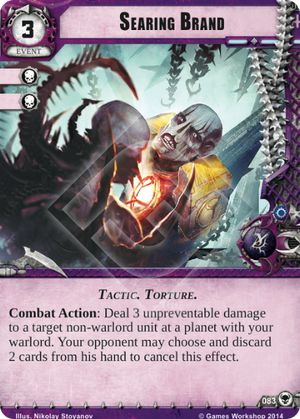
Moving on from a sub par card to the final Dark Eldar card in the War Pack we get Searing Brand. As a two shield T__orture event this card holds a key slot in any Urien deck. The ability can sometimes be difficult to trigger, but when you are able to make Searing Brand fire the effect is very worth while. When you aren’t able to use it for its effect, you will always be happy to use it for it’s two shields

Eldar

Unfortunately Eldar didn’t receive anything worth talking about. In my opinion neither Vectored Vyper Squad or Guardian Mesh Armor have a place in any existing or potential Eldar archetypes.

Tau

Unlike the Eldar, the Tau get a very substantial set of cards in Zogwort’s Curse. Opening with the Sa’cea XV88 Broadside, the Tau gain a powerful Elite army unit. Starting out with decent stats for its cost this army gets even better when it is equipped with an attachment. Some prime candidates include Gun Drones and Repulsor Impact Field, either bolstering its effect with stacked Area Effect or making it even more troublesome to remove. Like most Elites the Broadside is particularly weak to some removal effects, but I think the power of this unit outweighs that weakness.

088-heavy-marker-drone

Next Tau get a very interesting and versatile card, Tense Negotiations. At first this card was exciting for the prospect of being able to exhaust Aun’shi and have him able to remain at a planet for another combat round. The event has proved to be far more potent and versatile, being useful for any warlord able to take it. Baharroth particularly makes excellent use of Negotiations because of his ability to move around the board so much more freely. The cost of exhausting your warlord is definitely worth it in exchange for some of the battle abilities available.

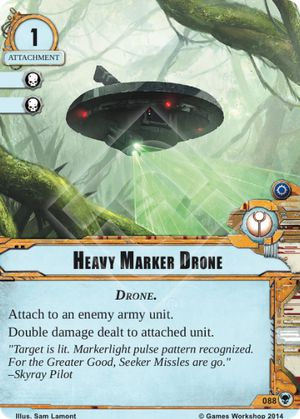
The last card for both this War Pack and for Tau, but certainly not the least for either, is Heavy Marker Drone. Immediately we have a two shield icon attachment which is great news for the faction in general but Commander Shadowsun in particular. There is excellent synergy paired with Shadowsun, Aun’shi, or Ambush Platform. For me, at least, this may be the most exciting Tau card all cycle.

Conclusion

Because of the warlord in the War Pack I think a lot of people were unimpressed with this release. In hindsight this pack was very important for all of the cards it provided to Astra Militarum and Tau, with some key cards for Chaos and Dark Eldar as well. It may not be glamorous but Zogwort’s Curse definitely is a valuable War Pack.

Revisiting Gift of the Ethereals

Revisiting Gift of the Ethereals

It’s time for another in my series of Warlord cycle re-reviews. Today we revisit the third War Pack, Gift of the Ethereals. When we first received this pack I think the members of the Squad were all very excited about getting to play with Aun’shi and exploring a new style of Tau deck. What I don’t think I realized was just how many cards in this pack would become commonly played in competitive decks. So without further delay lets get into the cards.

Tau

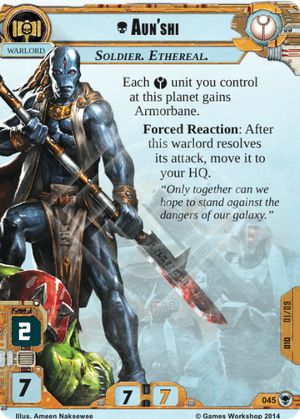
As usual, we start out with our signature squad of the pack. This time around we have [whc mode=‘short’]Aun’shi[/whc], a new leader for the scions of the greater good. While many were initially excited to bring Aun’shi to the table, he unfortunately hasn’t lived up to the my original hopes and expectations. His ability, while tremendously powerful, is difficult to use to its fullest without having the right support in play or holding the combo cards you need. Because of this it can take a very high level of finesse required to find success with this warlord.

045-aunshi

Alongside this enigmatic leader we are also given a number of very powerful cards in his signature squad. Starting out with the signature event, Ethereal Wisdom, we get an interesting combo card that plays into the tricks that the Ethereal deck is building toward. It can be combined with Kauyon Strike or Ksi’m’yen Orbital City to help chase down enemy warlords or armies with unexpected units. Outside of the combo potential offered by gaining the Ethereal trait, the +1 ATK can put you over the edge when it comes to bloodying an opposing warlord or winning a battle in a pinch. The army unit that follows Aun’shi into battle is the Ethereal Envoy. At first glance this unit seems unexciting, but if you look deeper you will see that it is actually be a candidate for best signature army unit to date. The Ethereal trait opens up a number of powerful combos, but this unit offers a number of additional benefits. First, because it is a one cost, one command unit it occupies a very beneficial space on the cost curve of your deck. Additionally its HP of 3 means that not only is it an efficient command unit but it is actually fairly resilient, able to stick around as long as many commonly used combat units. Because the Envoys have the Ethereal trait you can spread them out to win command at any number of planets and then use Kauyon Strike to gather any number of them to a planet to participate in combat. Finally, when supported by Orbital City you can use this unit to truly abuse the effective power of attachments like Ion Rifle and Gun Drones. Next, Aun’shi comes with his signature attachment, Honor Blade. This card isn’t essential to a successful strategy, but it is powerful enough that I would only recommend using it for its shield icons in a dire situation. If you can get it out and onto your warlord in the early game you will likely gain a tremendous long term value. Honor Blade is definitely a target to dig for with the ability of Earth Caste Technician.

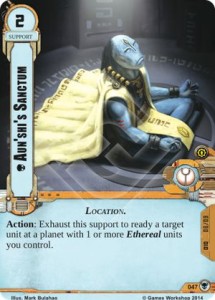
047-aunshis-sanctum

Finally, the signature squad is rounded out with Aun’shi’s Sanctum. Sanctum allows a unit coming from HQ to ready and attack in the first round of combat. It can help a ranged unit make multiple shots before the regular combat begins. And it can help mitigate the negative impact of exhaust effects from cards like Eldorath Starbane or Suppressive Fire. I definitely believe that Aun’shi is a warlord to look out for, though perhaps he not yet powerful enough to win on a consistent basis in high level play. If you’re interested in hearing some of my thoughts about how Aun’shi plays and seeing a deck list, check out my War Journal - Ethereals and Torture.

Space Marines

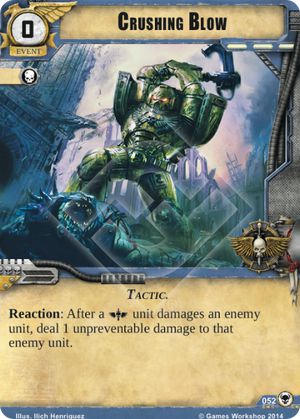
052-crushing-blow

In this War Pack, Space Marines receive a mixed bag of cards. We get White Scars Bikers, the Space Marine’s warlord groupie. This unit is strong but may fall a bit short compares to some of the other choices it competes for deck space with. The faction already has staple 3 cost army units with cards like Blood Angels Veterans and Honored Librarian filling that space. That aside, the Bikers are still an excellent target for many Space Marine card abilities like Drop Pod Assault and Indomitable. It addition the Soldier trait makes it a prime choice for Colonel Straken. Space Marines were also given two events in this War Pack. The first, Know No Fear, unfortunately has a lacklustre ability that is not worth the steep cost of exhausting your warlord. However, the second event, Crushing Blow, has become a staple in many Marine decks. This card means that opponents playing again a deck including a large number of Space Marine units need to be much more cautious about letting units take damage. If caught unaware or helpless, Crushing Blow could cause an attack that didn’t seem overly threatening to become devastating.

Astra Militarum

The first two War Packs in the Warlord cycle were both reasonably eventful for the Astra Militarum and this War Pack continues that trend. Mystic Warden arrives as a particularly interesting unit. While it has a fairly typical stat line for AM, its cost of 0 and its Forced Reaction mean that it plays very well into the many sacrifice focused abilities that the faction has available. In addition, it can be a hard to predict target for deployment with Staging Ground and if you have an opportunity to retreat and return the Warden to your HQ then the Forced Reaction won’t trigger. Even though the Mystic Warden isn’t a star card, or even really a staple for that matter, it is a useful for inclusion in many decks.

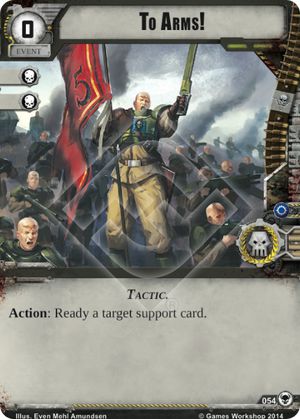
054-to-arms

The second card that Militarum receive in the pack is To Arms!. This is a card that I would dare to say is possibly the one of the best non-signature cards in this War Pack and probably even one of the best cards Astra Militarum received all cycle. To Arms! provides a great efficiency opportunity to AM, allowing them to unexpectedly ready supports when needed and providing a two shields when necessary. This card’s Action can be particularly effective with Catachan Outpost, Staging Ground, and Formosan Black Ship. The faction’s last card is a second double shield card, Honorifica Imperialis. This card has a very strong effect, allowing you to be very aggressive against enemy warlords. Unfortunately, due to its cost of 2, it ends up being too slow. Most of the time an AM player would prefer to get another combat unit on the battlefield, I don’t think Honorifica plays into the Militarum battle plan well enough yet. If bigger non-vehicle units start becoming available to AM this may become a more favourable include.

Orks

Unfortunately our fungal green skinned friends they have not been given many power cards at this point the in the Warlord cycle. Even though that may be true the cards released in this War Pack are definitely at least interesting, if not useful. The first card given, Mekaniak Repair Krew, is an example of this. As an army unit it doesn’t really excel in either command or combat by itself, but its ability can allow you to more effectively utilize some of your powerful supports such as Tellyporta Pad and Kustom Field Generator. If supported by Nazdreg this unit could become a decent combat unit and is a good target for Hostile Environment Gear.

057-goff-big-choppa

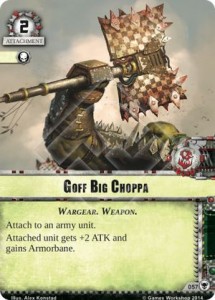
The next Ork card in the War Pack is the Goff Big Choppa. Armorbane is still one of the most powerful keywords in the game. Despite this fact, Big Choppa still has many of the same problems that Honorifica Imperialis does. However, unlike Astra Militarum, Orks have more large units that could effectively make use of this attachment. I don’t see this card being used often, but in an Ork Elite focused deck, or possibly other circumstances, the card will undoubtedly be very powerful. And rounding out the Ork cards in this pack is Ammo Depot. This card created a large amount of buzz when it first come out. Unfortunately, I have found that Ammo Depot suffers from many of the same problems that other alternate economy cards do. Being able to circumvent choke is good, but allowing your opponent to win more command unchallenged by relying less on the resources given by planets can dig you into a hole. In addition, if you are winning enough command or aren’t gaining enough resources Ammo Depot may end up being effectively useless. All of that said, if this card fills the right space in your deck it can be a very powerful ability, allowing you to more effectively play from behind or draw more army units to help build a large swarm.

Chaos

059-rotten-plaguebearers

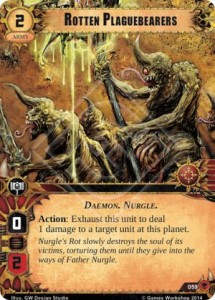
Opening up the War Pack for Chaos is another Nurgle Daemon, the Rotten Plaguebearers. This unit is quite unnassuming at first glance, but upon further examination it proves to be very versatile. Because the Plaguebearers deal damage as an Action they are able to activate during any action windows in any phase. This mean you can use them during deployment as a Deploy Action to try to destroy opposing command units or as a delay tactic. You are able to use this ability at the end of the command phase or the beginning of the combat phase to help counter or preempt early enemy abilities and attacks. Because the ability doesn’t specify a target beyond “unit” you are able to damage you own units to help power up Brutal, prime Ku’gath Plaguefather, or trigger other combos. It is worth remembering that when played with Zarathur, High Sorcerer the Plaguebearers instead do two damage due to Zarathur’s Reaction. This plays very well into the burn style of control often used in the High Sorcerer’s decks. Rotten Plaguebearers are definitely a great unit for inclusion in many Chaos decks.

061-throne-of-vainglory

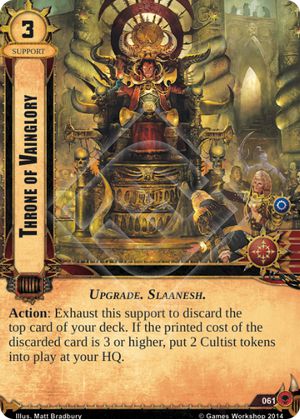
We also get a second Nurgle card in this War Pack, Nurgling Bomb. This is another powerful and potentially versatile ability allowing you to not only rout or damage enemy units, but also effectively retreat your own units by routing them and powering up other units that may benefit from having damage. The catch to this card though is that its high cost puts it in competition with a number of other popular Chaos events. I definitely think this is a card worth considering for inclusion but players should be conscious of the resource investment and their over all game plan. Lastly we are given the very strange Throne of Vainglory. This fairly janky card is most certainly still developing its utility so I won’t comment on it much. At this point I don’t see the Throne being included in many decks, but maybe after Ba’ar Zul the Hate-Bound and other cards in Planetfall are released this may change.

Dark Eldar

062-sslyth-mercenary

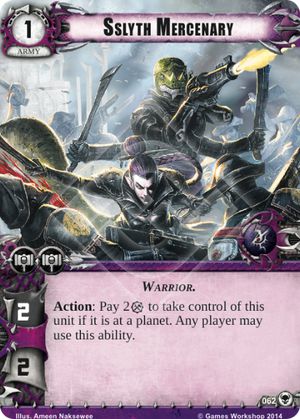
In this War Pack Dark Eldar only really received one card worth discussing, the Sslyth Mercenary. The second card, Despise, has little utility in the game currently. When I first saw the Sslyth Mercenary I was generally unimpressed but remained open to the possibility that it could be effective, in part because of the way my understanding of Heretek Inventor evolved. That instinct proved correct and the Sslyth has turned out to be a very solid unit. While it is especially good for gaining an early game lead in command it can sometimes be a liability in the later game, turning on its owner or ending up as a dead card if your opponent has enough of a resource advantage. I often include two copies in any deck using Dark Eldar cards.

Eldar

Last, but certainly not least we have three cards for the Eldar. They receive one of the best cards released in the Warlord cycle, the Warlock Destructor. Without a doubt this army unit is very strong, filling out the underrepresented two cost slot for Eldar combat units. You are provided with a great degree of flexibility with your resources if you look at the Destructor’s Forced Reaction as a utility opposed to an upkeep. Often times I have found myself playing it out to a planet where I know there will be combat and making peace with its death before battle ends. Paying two for such a strong unit is one of the most cost effective contributions to a fight in the game. If you end up paying the upkeep once then you are breaking even as the Warlock Destructor would likely be worth three resources if it didn’t have its Forced Reaction. Even paying the upkeep over multiple turns can be worthwhile if you have the resources.

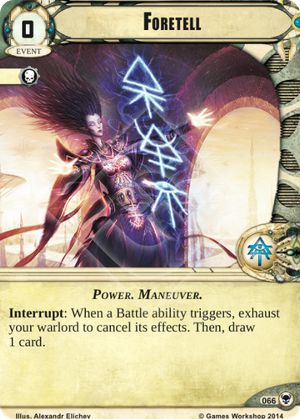
066-foretell

Eldar players also see their warlord groupie introduced in this pack but because of the wide availability of flexible and powerful three cost combat units in the faction the Eldritch Corsair isn’t worth giving much consideration. Finishing things off, Eldar continue to develop their control game with Foretell. When adding this to the other options Eldar have like Superiority, Nullify and Archon’s Terror this card provides Eldar players with one more way to shut out their opponent. The ability to cancel a battle ability can be game changing at the right time. With the extra bonus of drawing a card, this becomes a very solid include. I usually throw a single copy into any deck that includes Eldar.   So, in reflection, this was a major release for the game. Even though it has a large number of excellent cards I would say this is probably not the first pack a new player should buy. I do think it would be be  a good second purchase though. Seeing just how exciting a pack can be has me looking forward to how much this game will evolve in the coming Planetfall cycle. Until next time, may the Emperor protect!

Revisiting The Scourge

Revisiting The Scourge

In the first Warhammer 40,000: Conquest War Pack re-review I mentioned one of the main draws of the Living Card Game format is the slowly growing card pool that is expanding with new releases introduced at regular interviews. I’m going to continue the re-evaluation of the cards we’ve seen so far. After having reviewed the card in the game’s first War Pack, The Howl of Blackmane, it only makes sense to continue on with the second set of cards released. Today I’m going to look at the second War Pack, The Scourge.

Chaos

We start things off with Ku’gath Plaguefather and his signature squad. The arrival of this plague infested warlord opened up a different play style that focuses on attrition and survival opposed to the fragile aggro game that Chaos had previously been playing. His ability to move damage from himself not only meant he can survive longer than almost any other warlord in the game, but also that he can pick off select units in combat. It’s noteworthy that his ability doesn’t have to target the unit he is attacking, and that the damage moved isn’t assigned, and as a result cannot be shielded. He was very exciting at first but may have suffered from what could be called “little brother syndrome”. After his introduction Ku’gath didn’t see much widespread play. The general opinion was that Zarathur, High Sorcerer was the better choice. Ku’gath is beginning to see a resurgence, showing up at National Championships around the world and appearing in some very creative new deck builds. (If you are curious, go look for the most recent version of Sam Mann’s “Dirty Baker’s Dozen” decklist.)

image

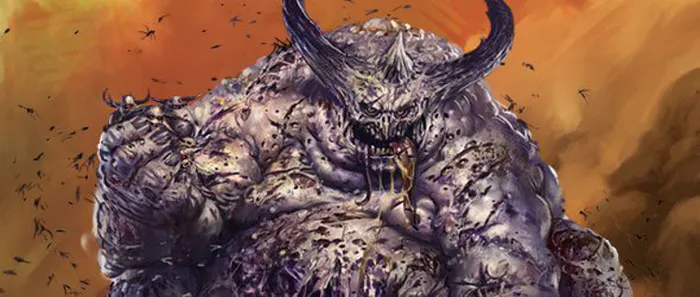
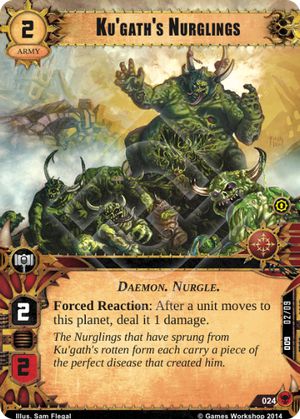
The tools at Ku’gath’s disposal require finesse, but can be very powerful. First we get four copies of Ku’gath’s Nurglings as his signature army unit. This army provides a double edged blade giving both interesting control but the possiiblity to severely hamper your own game. Thankfully, due to Ku’gath’s ability to move damage, this ability will often play toward your long term game of attrition. But once Ku’gath becomes bloodied they can be a tremendous liability. Playing them out early can provide a degree of control over an opponent with lots of mobile units, such as Tau or Eldar, but often times holding them until a key battle can help you break an opponent’s swarm of units coming to battle from HQ and thin out their total forces. Next in the signature squad we received Vile Laboratory. This signature support combos well with the Nurglings, allowing you to force your opponent into triggering their effect. Its greatest uses though are likely the ability to control the board, allowing you to force command units to be moved or combat units to leave the first planet. Quite possible the MVP of the signature squad, and a probably contender for best signature attachment, Ku’gath’s squad includes one copy of The Plaguefather’s Banner. This attachment instantly turns Ku’gath into a beast and allows him to survive and compete in the long term attrition game even after he is bloodied, if your opponent can even get him there in the first place. If you think that your opponent has ways of causing you to discard this card from your hand you should strongly consider playing it at your first opportunity, otherwise consider waiting until as late in the deploy phase as possible to put it out to help increase its impact on the game.

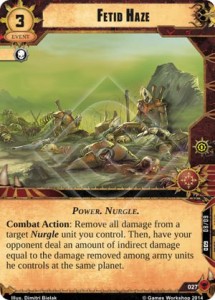
027-fetid-haze

Finally we round out the signature squad with two copies of the signature event, Fetid Haze. This event further Chaos’ massive damage game and carries the same costly price tag as events like Warpstorm. While the amount of damage dealt may be less than Warpstorm, Fetid Haze has the advantage of healing your warlord. When you play this event make sure you’re cognizant of the fact it can only damage army units, this means that warlords, tokens and now synapse units will not be affected by the casrd. Any extra damage that can’t be assigned to enemy army units just disappears which isn’t necessarily a bad thing since its still healing Ku’gath. Regardless, make sure you are paying attention when you play this, a Nullify or even some unexpected damage could mean that Ku’gath ends up bloodied if you mistime your Fetid Haze play. All told, this signature squad has excellent synergy internally and also some reasonable good synergy with the Chaos faction as a whole. I think the fact that he has seemed to be outshone by Zarathur has really been his main failing so far. An enterprising playing who works on their deck and get familiar with the play style of Ku’gath could find themselves being richly rewarded by his ability to play a very different style of game than any other warlord we have seen so far. I need to thank Victor, a player in my local meta, to reopening my eyes to Ku’gath’s real strengths.

Space Marines

This pack didn’t see much exciting for Space Marines, giving the faction the Morkai Rune Priest and the Fenrisian Wolf. Both of these cards provide some interesting possibilities but unfortunately seem to be over costed for what they provide. If you do bite the bullet though and dish out the resources Fenrisian Wolf provides a very interesting counter to a wide variety of abilities such as flying and Honored Librarian, in addition to allowing you to get a jump on damage in the combat phase.

Astra Militarum

image

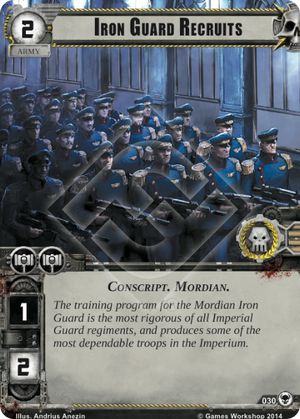
For AM we saw a variety of what could be seen as utilitarian but not overly exciting cards. First they get the Iron Guard Recruits. This army unit caused a lot of debate over whether it should replace the Sanctioned Psyker in decks when the Squad first reviewed it. The answer to the debate though is that it shouldn’t because they go in together! The Iron Guard Recruits are such a solid command unit that they add to the over all ability for Astra Militarum and its allying factions to compete in the command game, teamed up with the Psyker it helps build a formidable command presence. This is definitely a staple card for any deck that can take it. The other card the came out in the pack worth noting is the Inquisitorial Fortress. Though this card is more often then not a telegraphed presence on the table top it provides AM with a strong control piece that can be used in a large number of circumstances. Its definitely a strong consideration for inclusion in any deck that includes the Enginseer Augur and is noteworthy for being one of the few effects in the game to date that can pre-empt the effect of the Gleeful Plague Beast by routing it in the command phase. Originally I was not a huge fan of this card but now I’m really considering the ways I can put this to use in my decks. Militarum also received the attachment Dozer Blade. While cheap is good and it has a decent effect for its cost, there aren’t enough prominent Vehicle units in the game so far to really warrant its inclusion.

Orks

Next, our fungal green friends got what seemed to be a very solid trio of cards. Attack Squig Herd provides an excellent staple unit for the cost, giving great value in Nazdreg and providing, as Alex put it so eloquently, a “Glorious damage sponge”. This unit hasn’t seen as much play in the game as I think it deserves and is maybe a card that some ork players are just missing out on.

image

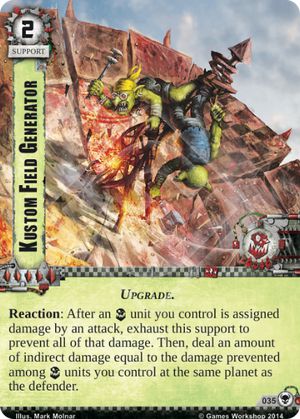
Dakka Dakka Dakka!, while very, very exciting at first is probably more situational than it originally seemed. While the ability is very powerful against swarms and many command units, and even helps boost some of your own command units and all or your brutal units, exhausting your warlord in the deploy phase has shown to be a tremendous cost. Ultimately because this card has two shield icons it proves to be a solid inclusion, but it is unfortunately the downside means that it isn’t effective as an event too often. Finally Orks received what might be their most important card to date, the Kustom Field Generator. This card provides what seems to be an almost necessary ability for Nazdreg decks and really just the faction in general. Due to the way indirect damage works this card can result in a number of defensive tricks. You can use it to assign damage to multiple units, allowing for multiple shield cards to be played against what was originally one big attack. You can make excess damage disappear if the indirect damage created is beyond the amount of health you have remaining at that planet among your ork units. Finally in the most basic sense you can just use it to push your Brutal units to the optimal point before attacking. You need to be aware though when play against Zarathur that it will cause extra damage to be added again, and that against Armorbane units it won’t allow you to use shields.

Dark Eldar

image

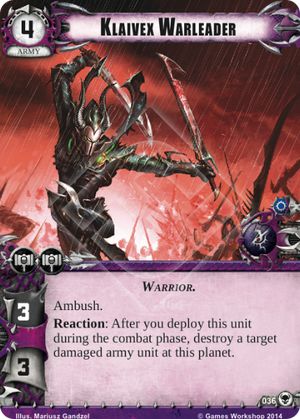
In this pack the torturous denizens of Cammoragh received the accursed Klaivex Warleader and the game called Conquest changed forever (or until rotation or a restricted list is introduced). This card is tremendously powerful, providing one of the few pure removal effects from the game. And Klaivex is an effective combat unit to boot. This card is an auto-include in most Dark Eldar decks and its something you should should be aware of whenever your Dark Eldar opponent has four resources in combat. Dark Eldar also received Soul Seizure in this pack. A very expensive event, Soul Seizure is really only playable in Urien Rakarth decks. When utilized by Urien this card provides a potentially game changing ability depending on what your opponents deck make-up looks like. It’s important to note that the unit put into play with this ability stays under you control until it dies and is then returned to its owner’s discard, meaning it could be a tremendous boost to your board position. Fortunately for everyone else Bladed Lotus Rifle also came in this pack, evening out the power curve of what Dark Eldar received by being almost irrelevant to the game. Currently it has a few interesting targets, but unfortunately due to Kabalites being small and there not being much variety in the trait it really isn’t worth looking at yet.

Eldar

The Eldar received three cards in this pack, but only one card is worth mentioning, Death From Above. This card plays a role in building towards a strong economic mobile unit game in Baharroth but without his signature units or his general deck style is maybe not worth including in many decks at the moment. The other cards Black Guardians and Dome of Crystal Seers don’t really provide anything of not to Eldar or their allies.

Tau

image

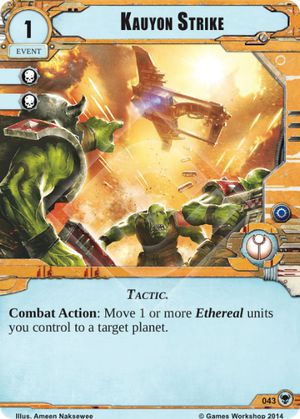
Our scions of the Greater Good also received three cards in this pack. The first card, Bork’an Recruits, provides a strong combat unit to the Tau and its allies. As a two cost warlord groupie it proves to be an excellent unit for its cost, and can be very dangerous played in any of the warlords that have access to the card. Next, Kau’yon Strike comes as a lynch pin for the Ethereal game plan for Aun’shi. Its two shield icons, low cost, and its very powerful ability means it an almost definite 3-of in any of his decks, though because of its trait specific nature it will likely not see play often in many other decks. This is a definite card to be wary of any time you are playing against the blue menace. The pack ends with a fizzle with the almost irrelevant Blacksun Filter. At this point this card does not provide much utility and is hard to rationalize for the deck slot. Accompanying this with some other Tau cards we’ve seen may provide for an alternate economic engine, I’m not sure it really stands up in the long run.   All told The Scourge provides some really excellent staple cards to the long term health of this game. It is a definite contender for top pack in the cycle, though it does maybe suffer from some strange and complicated rules interactions from the cards it provides. I would strongly consider this as a good buy for any player interested in playing Orks, Dark Eldar, or Chaos.

Pack Rating

[table width=“250” th=“0”] Space Marine,2/5 Astra Militarum,2/6 Ork,4/5 Chaos,* Dark Eldar,2/5 Eldar,1.5/7 Tau,2/7 [/table] ratings based on power cards out of the faction and ally cards received in the pack * = signature squad

The Great Devourer Spoiler - Venomthrope Polluter

The Great Devourer Spoiler - Venomthrope Polluter

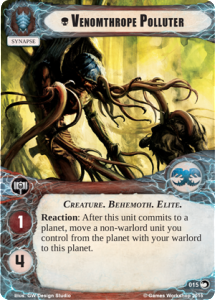
The Tyranids will soon become a playable faction in Warhammer 40,000: Conquest, baring their unrelenting hunger down on planets within the Traxis sector. As we get closer to the release of The Great Devourer deluxe expansion Fantasy Flight Games has been previewing more cards from the set. We already know that this release will contain two Tyranid warlords and five synapse units. Of those five synapse units, we have seen full spoilers for two (Savage Warrior Prime and Gravid Tervigon) as well as an obscured card (Stalking Lictor) from the fan for the preview article for Ol’ One Eye. The Tactical Squad is happy to be able to spoil the fourth Synapse unit from this expansion.

Venomthrope Polluter

Compared to the two spoiled Synapse creatures, the Polluter doesn’t allow you to be as aggressive in fighting battles or to quickly overwhelm your opponents with swarms of Termagant tokens.

venomthrope-polluter

It does, however, allow you a certain amount of mobility in terms of getting certain units to where you need them for future battles, or moving a unit back to an earlier planet if you have to commit your warlord to a later planet. This is especially advantageous with units who have the Hive Mind specialization. Moving a unit with Hive Mind turn the tables in an important command struggle or give your units abilities which can change the tide of a battle. The Venomthrope Polluter will require a bit more finesse and planning ahead to get the best use of its ability, but I think a player who decides to put in the effort to think a few turns ahead may reap the reward and surprise their opponents. The Tactical Squad thanks Fantasy Flight Games for letting us share this Tyranid spoiler with the Warhammer 40,000: Conquest LCG community.

Revisiting The Howl of Blackmane

Revisiting The Howl of Blackmane

One of the main draws of the Living Card Game format is the slowly growing and ever expanding card pool that is released. At regular intervals new cards are introduced that change the meta of the game and expand on existing cards. Because of this it is always important to re-evaluate previously released cards and think about how their standing has changed. We’ve now seen all the cards in the Warlord cycle released and the dust has begun to settle. Now is a great time to look back and re-consider the cards that came in each pack. Today I’m going to look at the cards we received in the very first War Pack, The Howl of Blackmane.

Space Marines

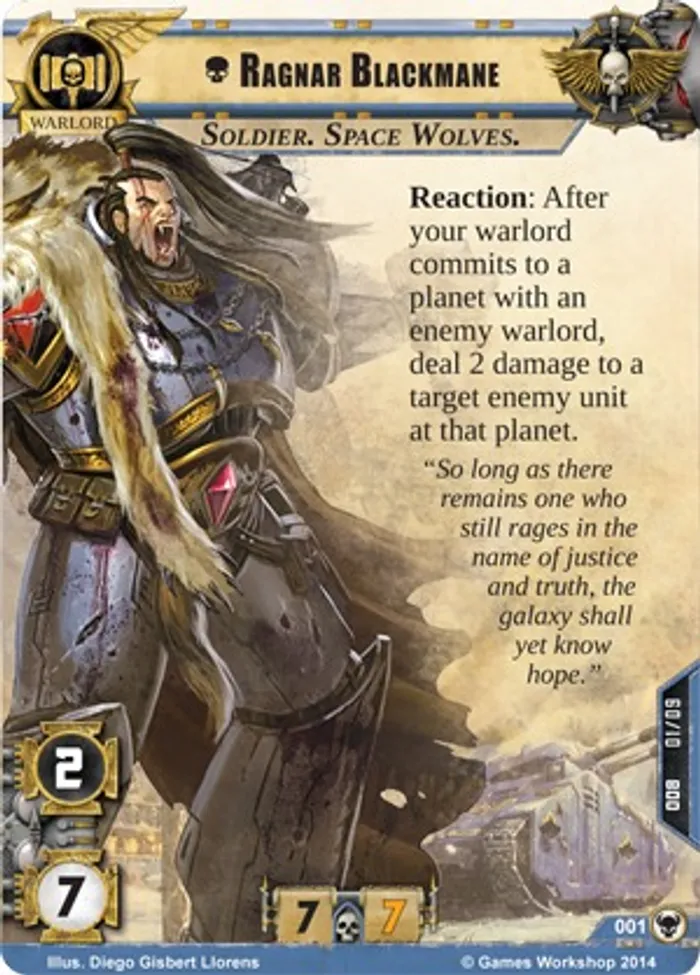
Starting with Ragnar Blackmane (The Howl of Blackmane, 1) and his signature squad. In our original review of Ragnar the Tactical Squad believed he would be a strong assassination threat and would be able to bully opposing warlords. This has been pretty on point. Ragnar’s high health coupled with his Reaction ability allows him to throw his weight around, pressing the advantage against players who make poor commit choices and can even add a lot of attrition against opponents on top of their game. Later units released in Astra Militarum have filled out the cost curve for a Ragnar deck, making fielding a balanced force much more affordable.

001-ragnar-blackmane

His signature army unit, Blackmane Sentinel (The Howl of Blackmane, 2), further benefit his ability to command the board state. This unit allows for a dynamic response to many situations, ideally setting up to contest command, but being able to also assist in combat or help bully enemy warlords if the opportunity presents itself. For 2 cost the sentinels are a steal for the upside they provide. Blackmane’s Hunt (The Howl of Blackmane, 5) adds even more maneuverability to the squad. The only negative thing I can say about this card is that your are limited to two copies. Moving onto Ragnar’s signature attachment, we get Frostfang (The Howl of Blackmane, 3). This is an excellent attachment playing into his assassination potential. Unfortunately, you can only have one relic in play at a time and many times you may want to save this for the shields and play Iron Halo (Core Set, 28) instead. Finally the signature squad has one copy of Ragnar’s Warcamp (The Howl of Blackmane, 4), the signature support. This card is too expensive for the limited benefit it provides. All told, Ragnar’s signature squad rates very highly among the warlords released in the game to date.

Astra Militarum

When The Howl of Blackmane first came out it seemed like Astra Militarum would benefit a lot from the cards they received, unfortunately it seems we overestimated the value of what they were given. After some reflection, Interrogator Acolyte (The Howl of Blackmane, 6) seems too expensive for the benefit provided. While it does benefit from the abilities of both Colonel Straken (Core Set, 2) and Torquemada Coteaz (The Threat Beyond, 89) there are just too many other cards that offer greater benefit for 3 resources. Muster the Guard (The Howl of Blackmane, 7) appeared to be an auto include for all Astra Militarum decks when it first came out. Now it is a rare sight. Most Militarum decks include too many out of faction units to benefit from this ability as much as we originally predicted. Beyond that it has become more apparent that exhausting your warlord during deployment is a very steep cost, sacrificing his command presence and putting your warlord at risk of being bloodied. Finally, AM received a direct damage card in Noble Deed (The Howl of Blackmane, 8) that also combos with the many “leaves play” abilities found throughout the faction’s army units. This card has its uses, but many Astra Militarum players get too eager to sacrifice units to trigger the “leaves play” abilities in their deck instead of allowing them to trigger through the natural attrition of battle.

Ork

Next in the pack are the Ork cards, which the Squad also seemed to have overestimated in our original review of the pack. The first card, Deathskull Lootas (The Howl of Blackmane, 9), seemed to have a very powerful ability that would benefit both Astra Militarum and Orks but after playtesting has seen minimal use. Though the ability seemed very good on paper the ATK of 2 is too low to consistently cause damage and as a result doesn’t fire very often. Combine this with the unit’s cost of 4 and we are left with an army that doesn’t deliver. The second card Orks received in the War Pack is Smash n’ Bash (The Howl of Blackmane, 10). This card suffers from one major restriction; it only works at a battle without an enemy warlord present, a condition that is difficult into. Even if you do find yourself in a battle where the opposing warlord isn’t present you will likely outclass your opponent so much that this effect is overkill, or be so outclassed that the damage it causes to all your units won’t make the extra attacks worthwhile.

Chaos

During my original look at The Howl of Blackmane I really

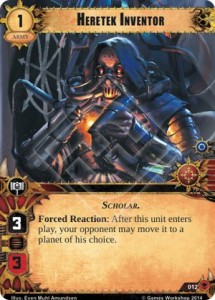
012-heretek-inventor

underestimated the utility of the Heretek Inventor (The Howl of Blackmane, 12). This card has become a staple in most Chaos decks. I’ve come to see that 1 cost for 1 command icon is always good and this card is no exception. Heretek Inventor provides a solid command unit with good combat stats with a drawback that can be very frequently played around. It can have the added benefit of mentally taxing your opponent. The other card received by Chaos, Death Guard Infantry (The Howl of Blackmane, 11), hasn’t ended up seeing any help and is still outclassed by Khorne Berserker (Core Set, 84) and Xavaes Split-Tongue (Core Set, 92).

Dark Eldar

Next up is Dark Eldar. They were the likely winners of the pack. Archon’s Palace (The Howl of Blackmane, 15) and Visions of Agony (The Howl of Blackmane, 14) have proven to be everything we hoped and expected when to be we first saw them. The pack also included Uber Grotesque (The Howl of Blackmane, 13) for DE, a card that ended up being much less exciting than I originally thought. Dark Eldar have shown that big units aren’t necessary for their game plan and while we did receive a torture focused warlord with Urien Rakarth (Descendants of Isha,116), the Grotesque feels too expensive for the value offered and just doesn’t fit in his deck.

Eldar

Eldar only ended up receiving one card in the Howl of Blackmane that they really benefited from. Empower (The Howl of Blackmane, 17) has to some degree become a staple for the faction. Due primarily to its double shield icons. Its ability is definitely powerful and is of use often enough to warrant including a couple copies in your deck. Butthe number of out of faction units commonly found in Eldar decks and Empower’s cost of 3 means that it is not an auto include and players rarely sleeve 3 copies in most decks when it is played. The other cards in the pack, Starcannon (The Howl of Blackmane, 18) and Vaulting Harlequin (The Howl of Blackmane, 16) haven’t seen much play, which is in line with our initial expectations.

Tau

020-aunui-prelate

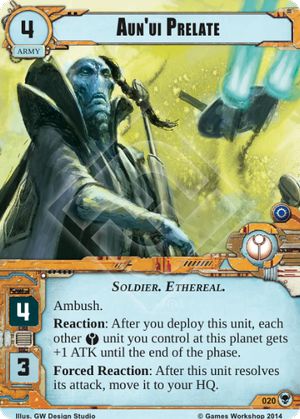
The last faction to receive cards in the the War Pack is Tau. Aun’ui Prelate (The Howl of Blackmane, 20) has definitely made a bigger splash than I expected. The army unit does a large amount of work in Aun’shi (Gift of the Ethereals, 45) decks; not only magnifying the hitting power of the units you control at a planet but also acting as a 4 ATK Armorbane unit. Homing Beacon (The Howl of Blackmane, 21), which I expected to be a key card in the Ethereal archetype, hasn’t seen much play. With slots for support cards being limited in most decks Homing Beacon just isn’t up to snuff compared more powerful supports are available for Tau. And lastly, Piranha Hunter (The Howl of Blackmane, 19) has turned out to be a complete dud.

Neutral

The Howl of Blackmane includes one neutral event, Calamity (The Howl of Blackmane, 22). When this card was released we talked on the podcast about its potential use as a combo card with different cheap units, particularly in Astra Militarum and Dark Eldar. Unfortunately, the cost and awkwardness of those combos is a nut that no one seems to have cracked yet. . The card’s remaining use as a board wipe has also gone mostly unrealized, though with the meta of the game trending toward lower costs units now might be the time to try splashing a copy or two in some decks. It’s coming up on nine months since we saw The Howl of Blackmane first released. Since then the whole of the Warlord cycle has passed and we’ve begun seeing cards for the first deluxe expansion, The Great Devourer and the second cycle of the game, Planetfall. With the knowledge we have now this pack if far less exciting than it was on release. It no longer stands up as a staple really only benefiting players interested in Dark Eldar and Space Marines.

Pack Rating

SM * AM 0/5 Ork 0/5 Chaos 1.5/7 Dark Eldar 2/6 Eldar 1.5/7 Tau 1/6 ratings based on power cards out of the faction and ally cards received in the pack * = signature squad